
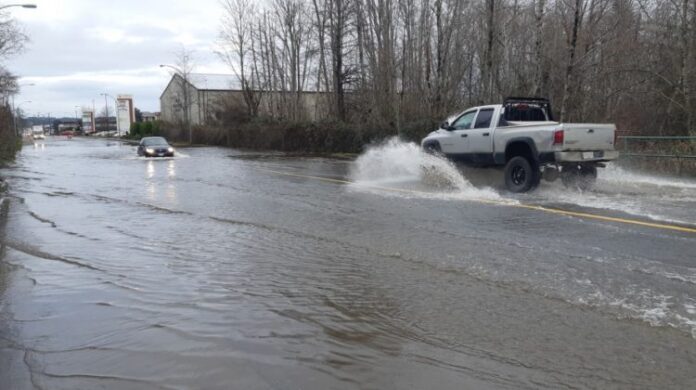

The province announced $39 million to benefit B.C. communities for disaster-risk reduction funding, many of which are on Vancouver Island.
According to the province, over 50 projects are getting funding through the community emergency preparedness fund. It will allow necessary changes like small-scale structural flood projects and improvements to community flood-mitigation strategies.
Projects include repairs to the Holland Creek weirs in Ladysmith to protect people from flooding and prevent damage to salmon-spawning grounds. They will get $2.75 million for the project and Ladysmith says the river has seen lots of damage over the last decade.
Courtenay will be getting $268,576 for a joint temporary flood-mitigation planning project with K’ómoks First Nation, Cowichan Tribes will get $150,000 for mobile flood control equipment and the Cowichan Valley Regional District will get $267,080 to create risk reduction policies and processes.
Funding of $42,402 has been approved for Parksville for an Arrowsmith dam inundation study. The Strathcona Regional District is also getting $400,992 to update the Oyster River floodplain map and help build its path forward with an understanding of balance and expression of culture.
Ladysmith mayor Aaron Stone says the project will help remove the risk of erosion along its banks, improve the restoration of aquatic habitat and ensure the continued enjoyment of the trail system.
“Additionally, funding to repair the intake weir further ensures the long-term supply of water to the town’s filtration plant,” said Stone. “Which is integral to distributing safe drinking water to the entire community, Stz’minus First Nation and the Diamond Water Improvement District.”
Minister of Water, Land and Resource Stewardship Nathan Cullen says they have worked with communities to develop B.C.’s first integrated vision for provincial flood preparedness.
“The new B.C. Flood Strategy will guide our continued work with First Nations, local government agencies, the agricultural sector, industry and conservation organizations,” said Cullen.
“Together, we can build stronger communities that are resilient to flood hazards in a changing climate.”
For more information, click here.