
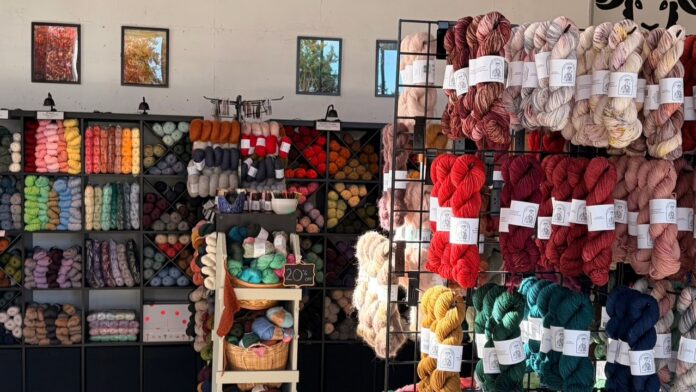

British Columbia crafters and small businesses are expressing dismay that the provincial sales tax will be expanded to yarn, fabrics and other materials.
The B.C. government tabled a budget last week that said, effective Oct. 1, the seven per cent PST will apply to clothing patterns, yarn, natural fibres, synthetic thread and fabric commonly used to make or repair clothing.

Most services related to clothing and footwear alterations and repairs will also be subject to PST. Basic laundry services will remain exempt.
Finance Minister Brenda Bailey said the move brings B.C. in line with most other provinces.
Nicole Bottles, the co-owner of the Spinnacle Yarn Cafe in Langford, B.C., said the expanded PST amounts to an additional tax on people who are trying to clothe themselves more ethically and sustainably.
“I think we’ve lost the plot a little bit about why textiles are PST-exempt,” said Bottles. “Knitting has become so popular, but at its core, we’re making clothes for ourselves.”

Bottles said a 12 per cent tax, when combined with the five per cent federal GST, will make her think twice about which products she stocks in her shop.
“I’ll be considering, when I bring in a yarn, looking at that ticket price and then adding that extra 12 per cent and asking: is someone really going to spend that much on a product?” she said.
She noted the change comes as many small crafting businesses are already grappling with increased costs due to U.S. President Donald Trump’s tariff regime.
Penny Lai, a third-generation owner of Victoria-based fabric store Gala Fabrics, said it’s unfair that small businesses are having to take on more of the tax burden in B.C.
“So many small businesses, such as myself, are already struggling with the loss of our U.S. customer base. This added cost will be another straw on the camel’s back,” said Lai.
Lai noted that, compared to buying fast fashion, sewing your own clothes is not generally budget-friendly.
“The fabrics we purchase are certainly much higher quality and they’re going to last you more than one washing, versus those fast-fashion items. But the trade-off is that it’s more expensive,” said Lai.
She said the added costs from the PST are going to be passed down to the consumer, making it even less affordable.
The federal government’s consumer price index shows the cost of clothing material, notions and services has increased by 2.5 per cent in Canada over the past 12 months. However, in B.C. costs rose just 0.1 per cent.

Sage Mcardle, who runs a small crochet business called Woodland Wool, said he was shocked by the change to PST.
“It’s going to be an added barrier for people accessing these arts and crafts,” said Mcardle. “A lot of people who do these things are seniors. There are people on fixed incomes.”
“We’re already dealing with economic uncertainty in general. People are spread thin,” he said.
Mcardle said it will affect how small business owners like himself need to price items. He said this is the time of year when many artisans are planning for fall and winter markets.
“I’ve got all these market commitments, and I’ve got to look at how I adjust to absorb this cost once it hits [in October,]” he said. “It’s going to be tough.”
While Mcardle also has a day job, he said he would love to grow his two-year-old crochet business.
“That goal seems to get further and further away the more barriers that are put in place, like this added tax,” he said.
Knitter Madeline Holmes from Victoria estimates she spends about $1,000 a year on yarn. She said she’ll typically spend about $200 on materials to knit one sweater.
She said the additional tax probably won’t prevent her from buying the yarn she wants.
“I will feel a little bit more guilty about it, because when you hear that number at the till, and it’s seven per cent more than you expect, you don’t feel as good about it afterwards,” said Holmes.